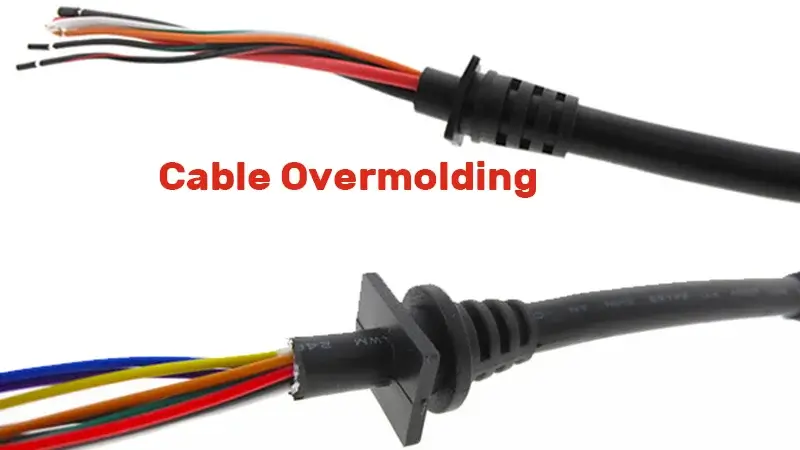
Cable overmolding is a specialized process that enhances cable assemblies by sealing connectors and wires with a molded thermoplastic layer. This not only improves durability and strain relief but also protects against moisture, dust, and mechanical wear. In this article, we’ll cover the key benefits, process, materials, and design considerations of cable overmolding, along with custom solutions from Zhongren.
What Are the Benefits of an Overmolded Cable?
Enhanced Protection: Seals out moisture, dust, and chemicals while withstanding vibration and impact.
Strain Relief: Reduces cable stress and prevents breakage at junction points.
Professional Appearance: Delivers a consistent, branded look ideal for consumer and medical applications.
Space-Saving Design: Eliminates bulky hardware for compact, integrated assemblies.
Waterproof Capability: Supports IP67/IP68 ratings for harsh or outdoor environments.
Cost-Effective at Scale: Reduces labor and assembly time in high-volume production.
Cable Overmolding Process
Cable overmolding is a sophisticated manufacturing process that transforms individual wires and connectors into a cohesive unit. This process not only enhances the durability and functionality of the cables but also provides a seamless aesthetic. Below is an overview of the general workflow of cable overmolding, followed by a detailed step-by-step breakdown of each phase.
1. Mold Selection
The first step in the cable overmolding process is selecting the appropriate mold. Manufacturers can choose between:
Custom Molds: Designed specifically for a particular application, custom molds allow for precise control over the shape, size, and features of the overmolded cable. This option is ideal for unique designs or when specific strain relief features are required.
Existing Designs: For more standardized applications, existing molds can be utilized. This approach is often more cost-effective and quicker to implement, making it suitable for high-volume production runs where customization is less critical.
The choice between custom and existing molds depends on factors such as production volume, budget, and specific design requirements.
2. Component Placement
Once the mold is selected, the next step involves positioning the cables and connectors within the mold.
Cables are stripped of insulation at the ends where they will connect to terminals or connectors. This ensures a solid electrical connection.
Cables and connectors are carefully arranged within the mold to ensure proper alignment and coverage. This placement is crucial to achieving optimal strain relief and ensuring that the overmolded material effectively protects all components.
Depending on the mold design, components may be secured in place using fixtures or supports to prevent movement during the injection process.
3. Material Injection
With the components securely positioned, the next phase is the injection of thermoplastic materials into the mold.
The first is material selection: The choice of thermoplastic material (e.g., PVC, TPU, TPE) is critical, as it affects the final product’s flexibility, durability, and resistance to environmental factors.
The next is the injection process. The selected thermoplastic is heated until it reaches a molten state and then injected into the mold under high pressure. This ensures that the material fills all cavities and encapsulates the cables and connectors completely.
4. Cooling and Solidification
After the material is injected, it must cool and solidify to form a durable overmolded structure.
The mold is typically cooled using a water or air cooling system to expedite the solidification of the thermoplastic. The cooling time can vary depending on the material used and the thickness of the overmold.
As the material cools, it transitions from a molten state to a solid form, firmly bonding to the cables and connectors. This solidification is crucial for achieving the desired mechanical properties and ensuring that the overmolded structure is robust and reliable.
5. Demolding
Once the material has solidified sufficiently, the mold is opened, and the overmolded cable assembly is removed. Any excess material, known as flash, may be trimmed away to achieve a clean finish.
In summary, the cable overmolding process involves careful planning and execution at each stage, from mold selection to cooling and solidification. By following these steps meticulously, manufacturers can produce high-quality overmolded cables that meet the rigorous demands of various applications while ensuring durability and reliability.
Overmolded Cable Design Considerations
Material Selection: The choice of material for both the mold and the overmold is critical. Engineers must consider the properties of the molding material, such as flexibility, durability, and resistance to environmental factors, to ensure that the final product meets performance requirements.
Aesthetic Considerations: The appearance of the overmolded part is also important. Designers should think about the desired finish and how the final product will look after the molding process is complete. This includes considering color options and surface textures that can enhance the product’s visual appeal.
Tooling Parameters: The operational parameters of the molding machine must be taken into account during the design process. This includes understanding the capabilities of the machine and how they align with the specifications of the mold and the materials being used.
Prototyping: To minimize costs associated with hard tooling, it is advisable to create a 3D printed model of the overmold. This allows for testing the form and fit of the design before committing to more expensive tooling. Adjustments can be made based on the prototype’s performance, reducing the risk of costly modifications later.
Mold Design: The mold should be designed to ensure even material flow and withstand molding pressure and temperature. A smooth mold surface prevents sticking and ensures consistent surface quality.
Process Optimization: Molding temperature, pressure, and time should be fine-tuned based on material characteristics and part geometry to avoid defects and ensure repeatability.
Performance Testing: Overmolded parts should be tested for mechanical strength, electrical integrity, and environmental resistance to ensure reliability in end-use conditions.
What Material Is Used for Cable Overmoulding?
Cable overmolding utilizes various materials to enhance the durability and functionality of cable assemblies. Below is an overview of common materials used in overmolding, their properties, and key applications.
Thermoplastic Rubber (TPR)
TPR combines the elasticity of rubber with the processability of plastics. It offers excellent flexibility and durability, making it suitable for applications requiring resistance to abrasion and impact. TPR is also resistant to a wide range of chemicals and can withstand high temperatures, making it ideal for harsh environments.
Polyvinyl Chloride (PVC)
PVC plastic moulding is popular for its cost-effectiveness, electrical insulation, and corrosion resistance. It’s often used for applications requiring long-term durability under variable temperatures.
Thermoplastic Elastomers (TPE)
TPE molding offers excellent UV, ozone, and chemical resistance—ideal for outdoor or demanding environments. It’s flexible, recyclable, and compatible with a variety of substrates.
Overmolded Cable Assembly Applications
Industrial Automation
Used in robotic arms, conveyor sensors, and motor connectors to ensure durability and protection from wear and moisture.
Automotive
Applied to wiring harnesses, sensor cables, and connector backshells for improved resistance to vibration, heat, and fluids.
Consumer Electronics
Common in headphone cables, charging cords, and gaming controller cables to prevent breakage and enhance flexibility.
Medical Devices
Protects sensor leads, diagnostic probes, and monitoring cables with waterproof and chemical-resistant overmolds.
Telecommunications
Used for antenna cables, network connectors, and data center wiring to ensure a reliable signal and environmental protection.
What Are the Differences Between Pre-Mold and Overmold?
In manufacturing, premolding and overmolding are both techniques that are molding one material over or around another. However, they serve different purposes and are used in different ways:
1. Premold
Premolding is creating an initial part or insert through one molding process, which is then placed in a second mold to have additional materials added around or over it.
The premolded part is usually created separately and allowed to cool. It’s then used as an insert for another molding process to create a complete or multi-material component.
2. Overmold
Overmolding specifically refers to molding an additional layer or material directly over an existing part, usually to enhance function, grip, or aesthetics.
Overmolding is commonly used to add ergonomic features, like rubberized grips on tools, improve durability, or provide additional functionality (e.g., watertight sealing) to the finished product.
Exploring Custom Overmolding Cables Solutions with Zhongren
Zhongren provides cable overmolding services tailored to meet specific functional and design needs across industries. Customization options include:
- Adjusting color to align with customer preferences, improve installation ease, and enhance visual appeal.
- Embedding brand names or company logos into the design.
- Adding mounting components such as flanges for easier integration.
- Modifying cable exit directions, whether straight, angled, or tailored to specific design needs.
- Selecting from various material options like PVC, TPU, and others, depending on performance needs.
- Applying different molding techniques, such as injection molding or low-pressure molding, based on the application.