Tail light lenses are a critical part of the functionality and safety of a vehicle’s lighting system. These components are designed not only to protect the light bulb and improve visibility but also to enhance the vehicle’s overall aesthetic. In this article, we will explore the various materials used in tail light lenses, manufacturing processes, and considerations for selecting the right material for different automotive applications.
What Is a Tail Light Lens?
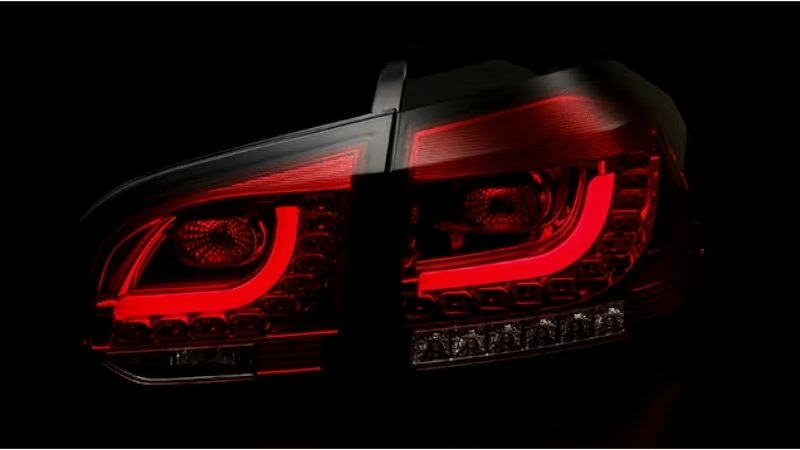
A tail light lens is an integral part of a vehicle’s tail light system. It serves several essential functions, such as protecting the light bulb from environmental elements, improving the distribution of light, and providing a visual signal to other drivers. Typically made from durable plastic materials, tail light lenses come in different colors, such as red for brake lights and clear or white for reverse lights. The lens is also responsible for ensuring the proper diffusion of light to avoid concentrated light spots and enhance the overall visibility of the vehicle, especially at night or during poor weather conditions.
Tail light lenses must be impact-resistant, UV-stable, and able to withstand varying environmental conditions while maintaining their optical clarity. The right material ensures that the lens performs as expected throughout the lifespan of the vehicle.
Common Materials for Tail Light Lenses
Modern auto tail light lenses are almost always made from engineering plastics rather than glass because plastics are lighter, more impact-resistant, and easier to mold into complex shapes. The most popular materials include:
Polycarbonate (PC)
Polycarbonate is the most popular material for tail light lenses due to its high impact resistance and UV stability. It offers excellent optical clarity, ensuring uniform light distribution. Polycarbonate is durable and can withstand harsh weather conditions, but it may be prone to scratching over time.
Poly Methyl Methacrylate (PMMA)
PMMA, also known as acrylic, is widely used for tail light lenses because of its high transparency and optical properties. It is lightweight, cost-effective, and provides good UV resistance, but it is less impact-resistant than polycarbonate, making it more suitable for lenses that don’t face high physical stress.
Polypropylene (PP)
Polypropylene is known for its excellent chemical and heat resistance, making it a good choice for tail light lens covers. While it does not offer the same optical clarity as polycarbonate or PMMA, it is durable and well-suited for lower-cost applications where impact resistance is less of a concern.
Acrylonitrile Butadiene Styrene (ABS)
ABS is a tough thermoplastic used for tail light lenses that require high strength and heat resistance. While it is not as transparent as polycarbonate or PMMA, it is durable and affordable, making it ideal for aftermarket applications where optical clarity is not the top priority.
Composites
Composites, though less commonly used, offer superior strength and heat resistance. They are typically used in specialized applications, such as military or high-performance vehicles, where durability and impact resistance are more critical than optical clarity.
Material Comparison Table
| Material | Impact Resistance | Optical Clarity | UV Resistance | Heat Resistance | Cost |
|---|---|---|---|---|---|
| PC | Excellent | High | Excellent | Good | Medium to High |
| PMMA | Good | Excellent | Good | Fair | Medium |
| PP | Moderate | Low | Good | Excellent | Low |
| ABS | Good | Moderate | Fair | Good | Low |
| Composites | Excellent | LOW | Excellent | Excellent | High |
Tail Light Lens Manufacturing Processes
The choice of material directly influences the manufacturing process, as different materials require different techniques to achieve the desired properties. The common process technologies included:
CNC Machining
CNC machining is often used for producing prototypes or low-volume production of tail light lenses. This process involves using computer-controlled tools to precisely shape the lens material into the required design. CNC machining is particularly useful for complex lens designs and provides high precision. This method is also compatible with materials such as polycarbonate and PMMA.
Injection Molding
Injection molding is the most common method for mass-producing tail light lenses. In this process, molten plastic is injected into a mold and allowed to cool, forming the shape of the lens. This method is highly efficient for large production runs. Injection molding is compatible with a wide range of materials, including polycarbonate, PMMA, and ABS.
3D Printing
3D printing, or additive manufacturing, is increasingly being used in the production of tail light lenses, particularly for rapid prototyping and small-volume production. 3D printing offers the advantage of creating highly detailed and customized designs without the need for traditional molds. This method is especially useful for testing different lens shapes or configurations before committing to mass production.
Vacuum Casting
Vacuum casting is another method used for producing tail light lenses, especially in low-volume or custom manufacturing. This process involves creating a mold from a prototype and then using a vacuum to draw molten material into the mold. The result is a highly accurate replication of the original design.
Surface Finishing
Common finishing methods include vapor polishing, hand polishing, and chrome plating. These techniques help to enhance the lens’s light transmission and give it a smooth, glossy appearance.
How Is Light Transmission Achieved in Tail Light Lenses?
Light transmission is a critical factor in ensuring that tail light lenses function properly and enhance vehicle visibility. Achieving optimal light transmission requires a combination of material selection, surface treatment, and optical design.
Material Selection
Base material clarity is important. Materials like Polycarbonate (PC) and Poly Methyl Methacrylate (PMMA) are commonly used for their excellent transparency. PMMA typically reaches 92% transmission, and PC around 89% before coloring. These materials allow light to pass through clearly, ensuring the tail light functions effectively and provides good illumination.
Surface Treatment
Surface treatments such as vapor polishing and hand polishing improve the clarity of the lens. Vapor polishing smooths the surface for better light transmission, while hand polishing removes imperfections, enhancing both appearance and performance.
Optical Design
Special textures and coatings on the lens help optimize light diffusion and reflection. These designs ensure uniform illumination, reducing light spots and improving visibility for other drivers.
Starting Your Own Tail Light Lens Project
From selecting the right tail light lens material (PC, PMMA, ABS, or PP) to choosing the suitable production process, the success of the automotive lens project needs professional knowledge and support.
Zhongren provides complete automotive transparent parts solutions, from common tail light lens materials, prototype-to-production capabilities, optical-grade coatings, and full regulatory support.