What makes POM plastic material one of the most popular engineering materials for precision parts? Because it offers a rare balance of high mechanical strength, dimensional stability, and low-friction surface, making it ideal for gears, bearings, and automotive components
What Is POM Plastic Material?
POM material (polyoxymethylene) is a semi-crystalline engineering thermoplastic derived from formaldehyde polymerization. It is categorized into two main types: homopolymer POM (POM-H) and copolymer POM (POM-C). Both types share similar mechanical profiles but differ in their stability and resistance to chemical degradation.
- Homopolymer POM (POM-H): Homopolymer POM results from pure formaldehyde polymerization. It achieves higher density at 1.41–1.43 g/cm³ and greater crystallinity. It offers excellent stiffness, fatigue endurance, and surface hardness. However, it can be sensitive to thermal degradation during processing.
- Copolymer POM (POM-C): Copolymer POM incorporates small amounts of comonomers, improving thermal and chemical resistance. The density is 1.39–1.41 g/cm³. It displays slightly lower stiffness than POM-H but enhanced dimensional stability and better resistance to hydrolysis and oxidation.
Advantages of POM Plastic Material
POM plastic material delivers specific performance benefits that drive its use in demanding components. The primary advantages follow.
High Mechanical Strength: POM plastic exhibits high stiffness and a modulus of elasticity that matches lightweight metals. These pom material properties allow components to support loads without deformation during extended operation.
Excellent Wear Resistance and Low Friction: The coefficient of friction for polyoxymethylene plastic measures around 0.2. This value, combined with self-lubricating behavior, reduces surface wear and extends service life. Maintenance requirements decrease as a result.
Dimensional and Thermal Stability: Moisture absorption remains below 0.2% for POM material. The low thermal expansion coefficient ensures shape retention in humid or elevated temperature settings.
Electrical Insulation and Chemical Resistance: Polyoxymethylene plastic functions as an effective electrical insulator. Resistance extends to solvents, lubricants, weak alkalis, and mild chemicals, enabling deployment in industrial conditions.
Easy Machinability: POM plastic processes efficiently through shaping, milling, turning, and drilling. The ease of machining shortens production cycles and lowers costs.
Limitations of POM Plastic Material
Despite its strengths, POM material presents specific constraints:
Limited Chemical Resistance to Strong Agents: Polyoxymethylene plastic degrades in contact with strong acids (pH below 4) or concentrated bases. Hydrolysis breaks the polymer chains, leading to cracking or loss of integrity.
Susceptibility to UV and Thermal Degradation: Exposure to ultraviolet radiation causes surface chalking, discoloration, and embrittlement in POM material over time.
Moderate Impact Strength: POM plastic material properties include impact resistance that decreases at low temperatures or under sudden loads.
Flammability and Emission Concerns: POM material ignites readily and burns with toxic formaldehyde release.
Higher Cost and Processing Sensitivity: Specialized POM grades cost more than commodity plastics like PP or PE.
Chemical and Mechanical Characteristics of Polyoxymethylene Plastic
The POM plastic material properties reflect its semi-crystalline nature, providing a balance between rigidity and resilience. The table below summarizes key POM material properties, comparing the two major grades, homopolymer and copolymer.
1. Mechanical Properties
| Property | POM-H (Homopolymer) | POM-C (Copolymer |
|---|---|---|
| Strength & Rigidity | Higher, excellent for load-bearing parts | Slightly lower, but more flexible |
| Toughness | Moderate | Better impact resistance |
| Wear Resistance | Very good, low friction | Good, smooth sliding |
| Dimensional Stability | High precision, more temperature sensitive | More stable, less shrinkage |
| Fatigue Resistance | Strong | Moderate but good for complex parts |
2. Chemical Properties
| Moderate but good for complex parts | POM-H (Homopolymer) | POM-C (Copolymer) |
|---|---|---|
| Heat Resistance | Lower, may degrade at high temp | Better long-term heat stability |
| Chemical Resistance | Sensitive to acids and oxidants | Excellent against acids, alkalis, hot water |
| Thermal Stability | Moderate | Excellent |
| Hydrolysis Resistance | Poor in hot water/steam | Good, resists moisture and heat |
Modified Types of POM Plastic
Standard POM material meets many needs, but modifications expand its range. There are several approaches to tailor pom plastic material properties.
Filled Modification
Inorganic or organic fillers such as aluminum oxide, carbon fiber, or talc incorporate into POM resin. This increases strength, stiffness, hardness, heat deflection temperature, and dimensional stability. Loading at 10–30% suits complex mechanical structures, thin-walled precision components, and engineering products.
Glass Fiber Reinforced Modification
Glass fibers (10–30%) added to POM boost mechanical strength 2–3 times and raise heat deflection temperature over 50°C. Dimensional stability improves for structural demands. Drawbacks include reduced wear resistance and potential anisotropic shrinkage.
Chemical Modification
Grafting side groups or incorporating stabilizers improves UV resistance or flame retardancy. UV-stabilized grades extend outdoor life from months to years.
Physical Blending Modification
POM mixes with other polymers or additives. High-molecular-weight lubricants like PTFE, HDPE, or UHMWPE reduce friction coefficient and wear rate. Rubber or elastomers add as tougheners to raise impact resistance.
Surface Modification
Coatings apply via plasma spraying, chemical vapor deposition, or electroplating. These create wear-resistant, corrosion-resistant, or oxidation-resistant layers on polyoxymethylene plastic. It improves adhesion for painting or bonding without bulk changes.
Processing Methods of POM Plastic Material
Injection Molding
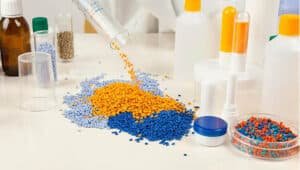
Injection molding fabricates POM components with efficiency and precision. POM pellets heat to a molten state and inject under pressure into a mold. The material cools and solidifies, adopting the mold shape. This process handles high-volume runs and intricate geometries with tight tolerances.
Extrusion
Extrusion creates semi-finished POM products such as sheets, rods, pipes, filaments, and profiles. Molten POM forces through a die to form continuous shapes. During extrusion, molten POM material is continuously forced through a shaped die and cooled to maintain consistent dimensions. The extruded products can later be machined using turning, milling, or drilling processes to create final components.
Blow Molding
Blow molding is applied when manufacturing hollow or thin-walled POM plastic parts such as containers, reservoirs, or fluid handling components. In this method, a heated parison (a tube of molten POM) is inflated inside a mold until it conforms to the mold walls. Once cooled, it forms lightweight and seamless parts.
Compression Molding
Compression molding involves placing a measured quantity of POM granules or preforms into a heated mold cavity. The mold is then closed and compressed under pressure until the material fills the cavity and solidifies. This technique is generally used for producing large, flat, or thick-walled parts that require high structural integrity but do not demand tight dimensional tolerances. Compression molding of POM also helps minimize internal stress and warpage.
Rotational Casting
Rotational casting, also known as rotomolding, is used to manufacture large, hollow POM parts. The process involves heating and rotating a closed mold containing POM powder or granules so that the material evenly coats the inner surfaces. As the mold continues to rotate, the polymer melts and forms a uniform wall thickness. After cooling, the finished part exhibits consistent strength and rigidity without weld lines or seams.
3D Printing
POM processes via fused filament fabrication (FFF) or selective laser sintering (SLS). Filaments or powders build layers for complex prototypes. High nozzle temperatures and enclosed chambers control warping. It enables high-strength, durable models, though less common due to material challenges.
Applications of POM Plastic Products
POM material serves diverse sectors due to its balanced pom plastic material properties.
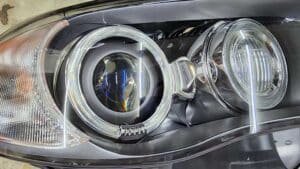
- Automotive: Gears, fuel system components, door handles, and seat belt parts.
- Industrial: Conveyor chains, valves, pump housings, and bearings.
- Consumer Goods: Zippers, buckles, tool handles, and appliance knobs.
- Medical: Instrument housings and disposable devices.
- Electrical: Switches, connectors, and insulators.
- Food Processing: FDA-approved conveyor belts and guides.
- Sports and Aerospace: Ski bindings, fishing reels, and lightweight brackets.
POM Material Parts Solutions
Conclusion
POM plastic material is a core engineering thermoplastic, blending homopolymer rigidity with copolymer versatility to deliver reliable performance across precision sectors. Modification strategies enable informed selection for optimal results. Zhongren provides POM custom manufacturing services, from prototyping to volume production.