Mining operations rely heavily on efficient material handling systems to transport ores, minerals, and other bulk materials. Among the critical components in these systems are mining rollers, which ensure smooth, continuous operation of conveyor belts.
What Are Mining Rollers?
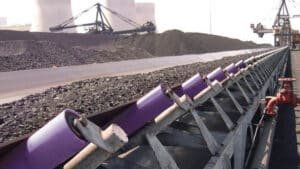
A mining roller is a cylindrical component installed along the length of a conveyor belt system. They support the conveyor belt, carry the weight of bulk materials, and enable smooth material transport from extraction points to processing or loading areas. These rollers are engineered to withstand heavy loads, abrasive conditions, and harsh environments typically found in mines.
Types of Mining Conveyor Rollers
There are several types of mining conveyor rollers, each tailored to specific applications within the mining industry.
Drive Rollers (Powered Rollers)
Drive rollers provide the necessary force to move the conveyor belt. They are powered by motors and connected through gear systems to transmit torque efficiently. Drive rollers are typically located at the head or tail of the conveyor system.
Support Rollers (Carrying Rollers)
Support rollers, sometimes referred to as carrying rollers, hold the conveyor belt and the transported material. They maintain the belt’s alignment and prevent sagging. Carrying rollers are usually installed at intervals along the conveyor’s length.
Return Rollers
Return rollers guide the empty conveyor belt back to the starting point after the material has been discharged. They are often flat or V-shaped. They help maintain belt alignment and reduce friction and wear.
Impact Rollers
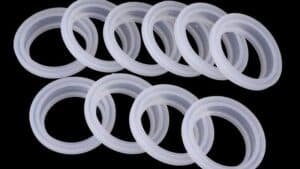
Impact rollers are located under loading points with rubber discs or rings to absorb the shock of material falling onto the conveyor belt. They reduce belt damage and prolong its service life by cushioning heavy impacts.
Troughing Rollers
Troughing rollers form the characteristic “U” shape of the conveyor belt, allowing it to carry larger volumes of material efficiently. They are commonly used in mining applications that involve transporting bulk ores or aggregates.
Custom Rubber Roller Solutions
Functions of Mining Rollers
Mining conveyor rollers perform several critical tasks:
- Supporting the Conveyor Belt: Mining rollers provide stable support for the belt along its entire length, preventing sagging and ensuring even load distribution.
- Guiding Material Flow: Rollers help keep the belt aligned, allowing materials to move efficiently from the loading to the discharge point.
- Reducing Friction and Wear: Quality rollers minimize friction between the belt and its supports, reducing energy consumption and wear on both the belt and roller surfaces.
- Absorbing Shock: Certain rollers, such as impact rollers, are designed to absorb the impact of falling materials, protecting the belt from damage.
- Facilitating Smooth Drive: Powered rollers transmit force to the belt in a controlled manner, ensuring consistent movement and reducing slippage.
- Improving Operational Stability: By maintaining belt alignment and supporting heavy loads, mining rollers contribute to the overall reliability and safety of conveyor systems.
- Reducing Maintenance Costs: Well-designed rollers reduce downtime, wear, and the frequency of repairs, contributing to lower operating costs over time.
Customization Considerations for Mining Rollers
Mining environments vary significantly, and conveyor systems must often be tailored to specific conditions. Customizing roller mining solutions requires careful consideration of several factors.
Material Selection
Selecting the appropriate material depends on factors such as load capacity, environmental conditions, and the type of material being transported. Common materials used in mining rollers include.
- Carbon Steel: Welded or seamless tube. Offers high strength and durability, most cost-effective for heavy-duty applications.
- Stainless Steel: Provides corrosion resistance for wet or chemical-laden environments.
- HDPE (High-Density Polyethylene): Lightweight, impact-resistant, and reduces noise, commonly used in conveyor return rollers.
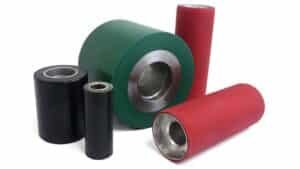
- Rubber-Coated Rollers: Offer additional protection against abrasion and impact, extending service life.
Manufacturing and Forming Methods
- Compression Molding: This method is primarily used for rubber molding, where rubber material is placed in a mold and cured under high temperature and pressure. It is widely used for mass production of rubber rollers, offering excellent abrasion resistance and impact strength.
- Transfer Molding: Suitable for rubber and thermoset materials, transfer molding involves preheating the rubber material to a flowable state and then transferring it into the mold under pressure. It is ideal for producing rubber rollers with complex shapes.
- Injection Molding: Injection molding is used for the high-precision manufacturing of plastic and rubber parts. It can produce rollers with intricate shapes and exact dimensions, making it suitable for applications that require high precision and fine design.
- Rubber Coating: Rubber coating involves applying a layer of rubber material over a metal roller core to enhance its wear resistance, corrosion resistance, and impact resistance. This method is commonly used in high-load and specialized environments.
- Polyurethane Casting: Polyurethane casting involves casting polyurethane material onto the roller core, providing superior abrasion resistance and high impact strength. It is well-suited for applications under extreme loads and harsh conditions.
Additional Considerations
- Load Capacity: Determines roller diameter, shell thickness, and shaft size
- Belt Speed: Influences bearing type and sealing requirements
- Environmental Conditions: Temperature, moisture, dust, and chemical exposure
- Maintenance Accessibility: Ease of inspection and replacement
- Noise and Safety Regulations: Especially relevant in underground operations
Differences Between Mining Rollers and Idlers
While mining rollers and idlers are often mentioned interchangeably, they serve different purposes. The following table highlights the key distinctions:
| Feature | Mining Rollers | Mining Idlers |
|---|---|---|
| Primary Function | Support and drive the belt | Support and guide the belt |
| Power | Can be powered (drive rollers) | Non-powered |
| Material Options | Steel, HDPE, rubber-coated | Mostly steel or steel with rubber coating |
| Location | Head, tail, impact, or transition zones | Along carrying and return runs |
| Placement | Head, tail, or along the belt | Intermediate or return sections |
| Shock Absorption | Some rollers absorb impact | Limited shock absorption |
| Load Capacity | High | Moderate |
Leading Manufacturers of Mining Conveyor Rollers
Mining conveyor rollers are critical components that determine conveyor reliability and cost efficiency. Customizing rollers involves careful selection of materials, bearings, manufacturing processes, and protective features, ensuring compatibility with the specific mining environment. Zhongren supplies customized rollers and custom solutions.