What is Overmolding?
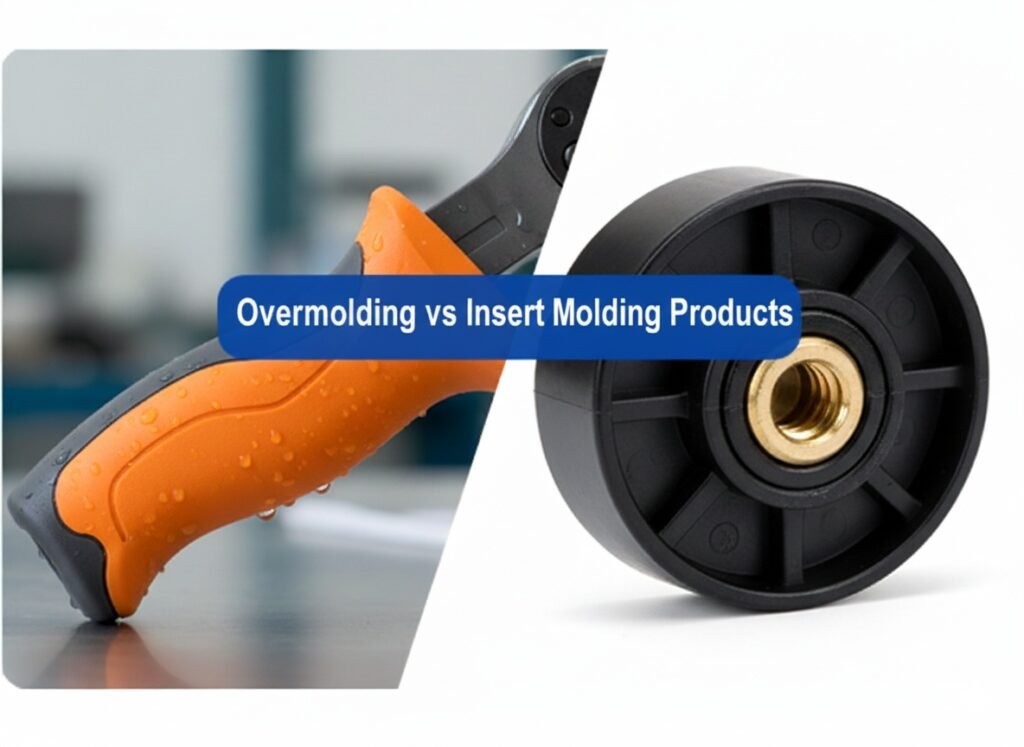
Overmolding process is a multi-step injection molding process. It involves placing a previously molded rigid plastic part into a mold cavity and injecting a secondary material over it. The secondary material adheres to the substrate, forming a strong, unified component. This technique is widely used to enhance functionality, aesthetics, and ergonomics in a variety of industries, including automotive, consumer electronics, medical devices, and industrial equipment.

Overmolding Material Types
Overmolding relies on material compatibility to achieve strong bonds. The substrate provides structural integrity, while the overmold layer adds tactile or protective properties. Common combinations include:
Engineering plastic substrates
- ABS (impact-resistant, TPE overmolded for handles)
- PC (transparent, heat-stable, TPU overmolded for device cases)
- PC-ABS (balanced strength and toughness, TPE/TPU overmolded for electronics)
- PP (lightweight, chemical-resistant, TPC overmolded for seals)
- PBT / Nylon (high strength, LSR overmolded for medical grips)
- ASA / SAN / PET / PMMA (specialized applications, transparency or outdoor resistance)
Overmold Layers
TPE / TPU (Shore 30A–90A for non-slip surfaces, protective layers)
- TPV (oil- and heat-resistant for automotive seals)
- LSR (biocompatible, soft touch for healthcare and consumer products)
- TSS / PVC (specialized consumer or industrial applications)
Advantages and Disadvantages of Overmolding
Advantages of Overmolding
- Overmolding reduces the need for secondary assembly processes by combining multiple materials into a single, integrated component, which simplifies production.
- This process improves ergonomics and tactile experience by allowing the addition of soft-touch surfaces directly onto rigid substrates.
- Overmolding enables the incorporation of sealing elements, vibration-damping layers, or protective coatings, enhancing the functional performance of the part.
- The technique allows designers to create visually distinct areas, such as contrasting colors or textures, which improves product aesthetics.
- Overmolding offers design flexibility, permitting the integration of multiple features into one part without significantly increasing manufacturing complexity.
Disadvantages of Overmolding:
- The process requires careful control of temperature and processing parameters, as improper conditions can result in delamination or weak adhesion between the materials.
- Overmolding can increase production cycle time compared to single-material molding due to the additional step of molding the secondary material.
- Only compatible material combinations can be successfully overmolded, which limits the selection of substrates and overmold materials.
- Mold design must accommodate both the substrate and the overmold material, which can increase tooling costs and complicate the manufacturing process.
What is Insert Molding?
Insert molding process is a single-shot injection process. The pre-formed component, called an insert, is placed into a mold cavity, and molten plastic is injected around it to form a single, integrated part. Unlike overmolding, the insert is typically a rigid component, which may be made of metal, plastic, or other engineered materials.
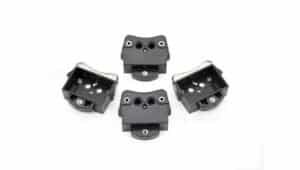
This process is commonly used to combine structural elements with molded plastics, reduce assembly steps, and improve dimensional accuracy. Insert mold vs overmold applications are frequently seen in products that require embedded fasteners, metal supports, or complex integrated components, such as electronics housings, automotive parts, and industrial equipment.
Insert Molding Material Types
The materials used in insert molding must be compatible with the injected plastic and suitable for the intended application.
Inserts Materials
- Metals predominate—stainless steel pins or tubes (corrosion-resistant, encapsulated in Nylon)
- Brass bushings (conductive, in ABS housings)
- Aluminum or steel threaded nuts (for fastening, in PP bodies), or electronics like PCBs and cables (insulated in PEI).
Encapsulating plastics
- ABS/PC (impact strength)
- Nylon (wear resistance)
- POM (low friction)
- TPU appear for hybrid grips.
Advantages and Disadvantages of Insert Molding
Advantages of Insert Molding
- Insert molding provides strong mechanical integration between the pre-formed insert and the overmolded material, ensuring part durability and structural integrity.
- This process reduces assembly time by combining multiple operations into a single molding step, which improves production efficiency.
- Insert molding allows precise placement of inserts, which ensures consistent alignment and high-quality output for complex components.
- The technique enables the integration of functional components, such as threaded metal inserts or electrical contacts, directly into the molded part.
Disadvantages of Insert Molding
- Insert molding requires more complex mold design, as precise alignment and secure placement of the inserts are essential for achieving quality results.
- The process may increase tooling and setup costs due to the additional steps needed for handling and positioning inserts within the mold.
- Design flexibility is limited because the geometry and placement of inserts must be carefully planned to avoid defects during molding.
- Processing errors, such as displacement of inserts or incomplete filling of the plastic around the insert, can result in defective parts that fail quality standards.
Overmolding and Insert Molding Applications
Overmolding and insert molding are key manufacturing methods for combining materials, offering distinct advantages in part performance, functionality, and assembly.