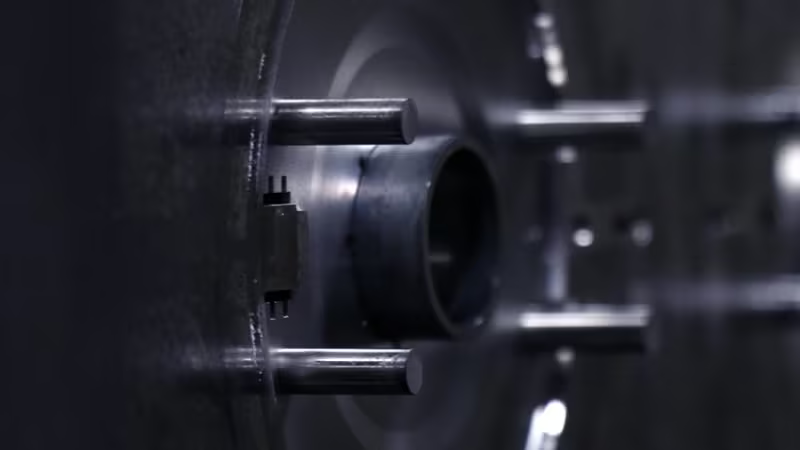
The ejection system injection molding handles the removal of solidified plastic parts from the mold cavity after cooling. Proper design of the ejection system ensures that parts are released without distortion or damage, which maintains dimensional accuracy and surface quality. In mold design, the ejection system must align with the part geometry to avoid defects such as scratches or warping.
What is the Ejection System in Injection Molding?
The ejection system in mould is the mechanism responsible for pushing or extracting the molded part from the cavity once the plastic has solidified and the mold opens. Given that plastic parts often shrink and grip tightly onto mold cores, an effective ejection mechanism is necessary to separate the part cleanly without deformation or damage. This ensures smooth demolding and consistent cycle times for mass production. It works together with other subsystems described in the injection moulding working principle to achieve stable and efficient molding cycles.
Main Functions of the Ejection System
The ejection system performs several vital functions to ensure product quality and production efficiency:
- Apply uniform force to detach the part from the mold without causing distortion.
- Synchronize with the mold opening sequence to ensure timely release.
- Integrate venting features to break vacuum seals formed during cooling.
- Minimize surface marks on the part to preserve aesthetic and functional quality.
- Support high-volume production by enabling rapid and reliable cycle repetition.
- Prevent damage to the mold components through controlled retraction mechanisms.
How Does the Ejection Process Work in Injection Molding?
The ejection process in injection molding follows a series of steps to ensure safe part removal.
- The cooling phase completes, allowing the molten plastic to solidify within the mold cavity.
- The mold halves separate, with the moving platen pulling away to open the mold.
- The ejection mechanism activates, typically driven by the machine’s ejector plate or hydraulic system.
- Force is applied through components like pins or plates, pushing the part off the core or out of the cavity.
- The part fully detaches and falls or is collected by automation, such as robotic arms.
- The ejection components retract to their original position using springs or return pins.
- The mold closes, and the injection cycle restarts with the next shot of material.

Ejection System in Injection Molding: Components and Types
The ejection system in injection molding ensures that molded parts are safely and efficiently removed from the mold cavity after cooling. A well-designed ejection system prevents part deformation, surface marks, or dimensional inaccuracies. It consists of several core components that work together to release parts through different mechanisms, depending on part geometry and production needs. Professional plastic moulding service providers often optimize these systems to match production requirements and reduce maintenance frequency.
1. Key Components of the Ejection System
The ejection system is made up of mechanical elements that apply force to release the molded part from the cavity. Each plays a specific role in maintaining smooth ejection and consistent product quality.
Ejector Pins: Cylindrical rods that push parts out through direct contact with non-visible areas. Commonly used for flat or bossed surfaces, they provide effective force but may leave small marks if not properly positioned.
Ejector Blades: Flat, rectangular components designed for thin ribs or narrow sections. They distribute force more evenly than pins, reducing the risk of cracking delicate features.
Ejector Sleeves: Hollow cylinders that surround core pins to eject tubular parts such as caps or bushings. They ensure uniform force around the inner diameter of the part.
Stripper Plates: Plates that move forward to strip the part along its perimeter. Ideal for large, thin-walled parts, they prevent localized stress and warping.
Retainer Plates: Components that hold and align ejector pins, blades, and sleeves in position. They maintain accuracy and facilitate easy maintenance during repeated cycles.
Return Pins or Springs: Mechanisms that reset the ejection system after each cycle, ensuring no interference during mold closure.
Drive Mechanisms: Hydraulic or pneumatic devices that power ejection in large or complex molds, offering controlled movement and adjustable ejection force.
2. Main Types of Ejection Systems
Different combinations of these components form various ejection mechanisms, each suited to specific part designs and manufacturing conditions.
- Pin-Based Ejection: Uses multiple ejector pins to push the part out of the cavity. Suitable for simple or flat geometries such as electronic housings. It is cost-effective and easy to maintain, but may leave pin marks on the surface.
- Blade Ejection: Employs flat blades to release parts with thin ribs or narrow walls, common in automotive and electrical connectors. Provides uniform force but can lead to higher wear if not properly lubricated.
- Sleeve Ejection: Surrounds cores with ejector sleeves to release cylindrical or tubular parts like caps or fittings. Ensures even ejection and minimal deformation, though it increases machining complexity.
- Stripper Plate Ejection: Uses a moving plate to strip the entire part off the core. Ideal for thin-walled or deep-drawn items such as containers. Offers smooth, mark-free ejection but requires precise alignment.
- Air-Assisted Ejection: Applies compressed air to gently separate lightweight or delicate parts. Suitable for small, intricate, or medical components. It avoids physical marks but provides limited force for heavier parts.
- Hydraulic or Pneumatic Ejection: Uses powered actuators to drive large ejector assemblies in molds for big or complex parts. Provides strong, controllable ejection but involves higher maintenance costs.
- Hybrid Ejection Systems: Combine different methods, such as pins with air, to optimize ejection for complex geometries. Offers flexibility but adds design complexity and cost.
Considerations When Selecting and Designing Ejection Systems
Factors Influencing Ejection System Selection
- Part geometry significantly influences the choice of ejection methods in injection moulding. Simple shapes with flat surfaces are compatible with pin-based systems, while complex geometries with undercuts require lifters or sleeves for effective release. For such designs, partnering with an experienced custom molding services provider ensures proper optimization during mold design.
- Material properties determine the ejection force needed. High-shrinkage materials demand greater force compared to low-shrinkage materials due to stronger adhesion to mold surfaces.
- Production volume affects system durability requirements. High-run operations need robust systems like hydraulic ejection to withstand thousands of cycles without wear.
- Aesthetic requirements necessitate careful placement of ejectors. Positioning components in non-visible areas prevents surface marks that could compromise part appearance.
- Machine specifications restrict system options. Ejector stroke length and available daylight in the molding machine limit the types of ejection systems that can be implemented.
- Budget constraints guide the selection process. Cost-effective options like pins are preferred when financial resources are limited, while advanced systems like stripper plates require higher investment.
Design Considerations for Ejection Systems
- Achieve uniform force distribution to prevent part distortion. Strategic placement of components avoids stress concentrations or hot spots during ejection.
- Incorporate draft angles of 1 to 2 degrees on part walls. This facilitates easier release by reducing adhesion to the mold surfaces.
- Use simulation software to model ejection dynamics. This predicts potential stresses and ensures optimal system performance.
- Ensure compatibility with mold venting. Proper venting prevents vacuum locks that could cause parts to stick during ejection.
- Test prototypes under actual production conditions. This verifies the system’s effectiveness and identifies areas for improvement.
Common Problems with Ejection Systems and Solutions
Ejection systems can encounter issues that impact production. Analysis of the causes will help to find the solutions.
Uneven Force Distribution
Uneven force distribution causes part warping due to misplaced pins or blades. To resolve this, recalculate component placements to ensure balanced force application and add more ejectors if needed.
Sticking
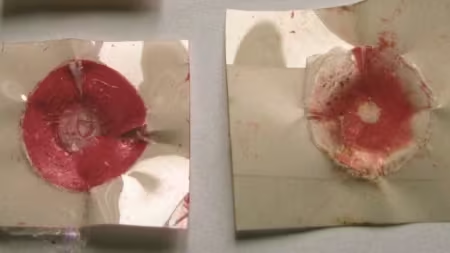
Sticking occurs from vacuum or shrinkage adhesion, often due to insufficient venting or premature ejection. Solutions include adding air channels to break vacuum seals and adjusting cooling times to ensure complete solidification.
Surface Marks
Surface marks appear from pin or sleeve contact, affecting aesthetics in visible areas. Relocating ejectors to hidden spots or using softer materials for components minimizes this issue.
Component Wear
Component wear reduces effectiveness over cycles, with high friction causing buckling or breakage. Using hardened steels for ejectors and scheduling regular inspections prevents these failures.
Incomplete Ejection
Incomplete ejection leaves parts in the mold due to low force or misalignment. Increasing drive power and ensuring proper alignment of guides corrects this problem.
Flash Formation

Flash formation results from gaps during ejection, caused by poor sealing. Tightening mold tolerances and performing regular mold cleaning eliminates this issue.
Conclusion
An ejection system injection molding will influence the part quality and manufacturing cycles. The selection and design of the ejection system in mould hinge on understanding various types of ejection in injection molding and tailoring solutions to specific product and process requirements. Zhongren provides customized injection molding mold design and manufacturing, including optimized ejection system solutions to ensure product quality and production efficiency.