Automotive tail lights are critical safety components mounted at the rear of a vehicle and ensuring the vehicle is visible in low-light conditions. This article explores all the information about the tail light you need to know.
What are Automotive Tail Lights?
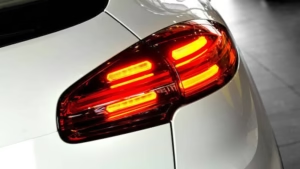
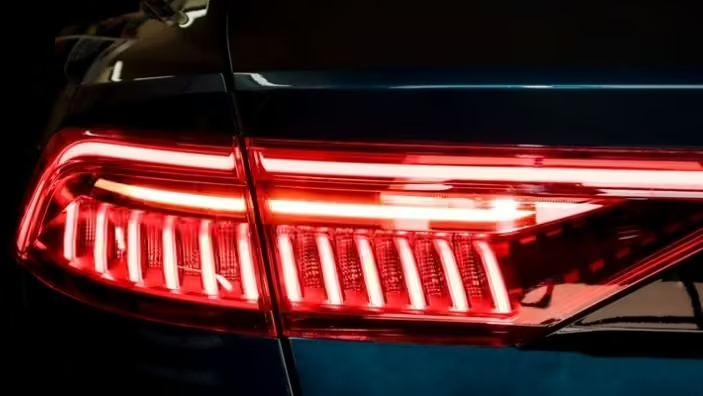
Automotive tail lights are red lights positioned at the rear of a vehicle, designed to illuminate when the headlights are on or when the vehicle is operating under low visibility conditions, such as dusk or fog. Their primary function is to make the vehicle visible to other drivers to enhance safety during nighttime or adverse weather driving. Tail lights also often contain integrated functions for signaling and braking, serving as critical communication tools between drivers. Their design and durability heavily depend on typical material options that ensure optical clarity, heat resistance, and long-term performance.
Types and Features of Car Tail Lights
The evolution of car tail lights has been driven by advancements in light source technology, each offering distinct features. Below is a detailed comparison of the types of auto tail lights.
Materials Used in Car Rear Lights
The manufacturing of automotive tail lights requires materials with excellent optical properties, durability, and resistance to environmental factors. The following materials are commonly used in crafting car rear lights:
- Polycarbonate (PC): Durable and impact-resistant, with excellent optical clarity, polycarbonate ensures bright, consistent illumination. It resists heat and UV radiation, maintaining performance in harsh conditions. Primarily used for tail light lenses.
- Acrylic (PMMA): Often shaped using PMMA injection processes, this material is highly transparent with superior scratch resistance, offering excellent light transmission while being lighter than glass. PMMA supports a wide range of colors, shapes and custom designs. Used for headlights and tail light lenses, especially in custom designs.
- Acrylonitrile Butadiene Styrene (ABS): Tough and rigid, ABS provides strength and impact resistance while being cost-effective. ABS is also resistant to heat, chemicals, and physical impacts, and is widely used in ABS plastic molding for tail light housings due to its excellent processability and strength. Used for tail light housings and structural components to protect internal electronics.
- Polypropylene (PP): Lightweight and flexible, with good chemical resistance and optical properties, PP is commonly shaped through injection PP techniques to withstand stress and environmental exposure in rear lighting systems. Used for lenses or secondary components where flexibility and durability are needed.
- Composites: Combining plastics with glass or carbon fibers, composites offer enhanced strength and reduced weight. Used in high-performance tail light housings for lightweight, durable designs in premium vehicles.
Why Choose Customized Car Tail Lights?
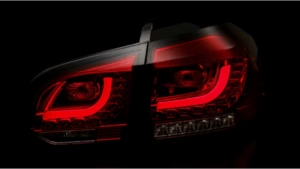
Customization of car tail lights offers several advantages to vehicle owners and manufacturers alike:
- Unique Aesthetic Appeal: Custom tail lights enable personalization, allowing car owners to express style through different colors, shapes, and lighting patterns.
- Enhanced Safety Features: Custom designs can incorporate the latest LED or sequential lighting technology, improving visibility and signaling clarity.
- Improved Performance: Tail lights can be engineered with advanced optics and materials to deliver brighter, more energy-efficient lighting.
- Brand Differentiation: For manufacturers, custom tail lights help distinguish models and establish iconic brand signatures.
- Upgrade Opportunities: Custom tail lights allow updates on older vehicles with modern technologies without full headlight replacement.
- Compliance Flexibility: Customization can ensure adherence to specific regional regulations or performance standards.
Manufacturing Processes for Custom Car Tail Lights
The production of custom car rear lights involves sophisticated techniques. Below are the key processes used in crafting automotive tail lights:
CNC Machining: This computer-controlled process uses cutting tools to shape materials like acrylic or polycarbonate with pinpoint accuracy. Ideal for prototypes or complex lens designs, CNC machining ensures smooth finishes and precise dimensions.
3D Printing: 3D printing builds tail light components layer by layer from digital models. It’s perfect for rapid prototyping, allowing designers to test innovative shapes or patterns before committing to mass production.
Injection Molding: Molten plastic is injected into molds to produce consistent, high-volume tail light lenses. This injection molding service ensures repeatable quality, scalability, and precision for both standard and custom rear lighting components.
Vacuum Casting: Liquid resin is poured into molds under vacuum to create detailed, high-quality lenses. This process is ideal for small-batch production or custom designs requiring intricate patterns or unique finishes.
Surface Finishing: Techniques like vacuum metalizing or chrome plating enhance the aesthetic appeal and durability of car tail lights. Protective coatings are applied to improve weather resistance and maintain light output over time.
Automotive Tail Lights vs. Brake Lights
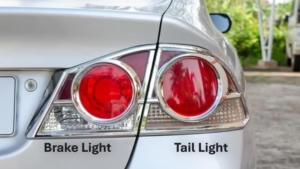
While both automotive tail lights and brake lights are located at the vehicle’s rear and emit red light, they serve distinct purposes:
Car Tail Lights: These emit a steady, dimmer red light when the headlights are on, ensuring the vehicle is visible in low-light conditions. They mark the vehicle’s presence, enhancing safety during night driving or inclement weather.
Brake Lights: These activate in a brighter red when the driver applies the brakes, signaling to others that the vehicle is slowing or stopping. Their increased brightness and intermittent nature make them critical for preventing rear-end collisions.
Partner with Zhongren for Advanced Automotive Lighting Solutions
Our company employs CNC machining, 3D printing, and injection molding to create tail lights that meet stringent DOT and ECE standards. Whether you need a prototype or a large-scale production run, our comprehensive services deliver high quality and precision. Contact Zhongren today to explore our custom automotive tail light solutions.